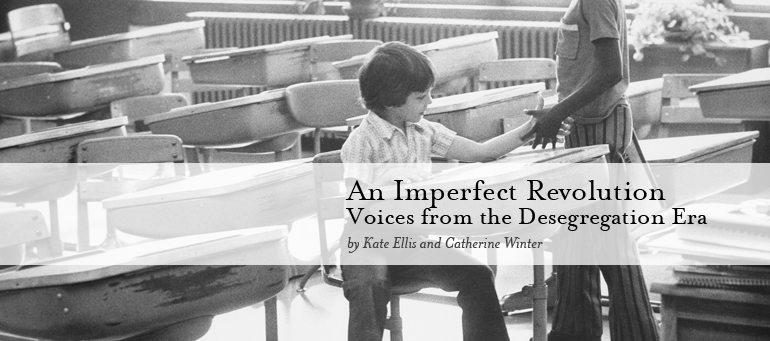
Nearly everyone who experienced school desegregation has a story to tell about crossing racial lines. Together they reflect an era marked by struggle and hope, anger and idealism.
American RadioWorks traveled to Louisville, KY and Charlotte, NC to talk with people about their memories of integration. Here are some of their stories.
Benetha Ellis "I don't see the benefits of desegregation."
Mae Clark Orr "For the first year or two of busing I carried a gun."
The Effects of Integration In the 1970s, for the first time, large numbers of white children and black children began attending school together. It was an experience that shaped them for life.
How did school desegregation happen? In June 2007, the U.S. Supreme Court struck down school desegregation plans that look at students' race. It is the capstone of 50 years of shifting laws that shape the racial mix of public schools.